The PAID Program: A Federal Path for Correcting Payroll and Leave Violations
The U.S. Department of Labor’s Payroll Audit Independent Determination Program gives qualifying employers a voluntary process for identifying and resolving certain federal wage-and-hour and family-leave violations.
The big picture: PAID can help employers correct mistakes, compensate affected employees and resolve defined federal claims without traditional litigation.
But the program is not amnesty—and it does not resolve violations of Washington law.
What PAID accomplishes
The PAID Program creates a supervised process through the U.S. Department of Labor’s Wage and Hour Division for addressing potential violations involving:
Federal minimum wage
Federal overtime
Improperly retained tips
Certain Family and Medical Leave Act requirements
Through PAID, an employer conducts a self-audit, reports identified issues to the Wage and Hour Division and works with the agency to calculate and deliver the required remedies.
For employees, this can mean receiving 100% of the federal back wages owed or having an FMLA-related issue corrected without filing a lawsuit.
For employers, it can provide a defined path to correct practices and resolve specific federal claims more efficiently.
How the process works
1. Complete the required reviews
The employer reviews the Department of Labor’s FLSA and FMLA compliance materials and saves the resulting completion certificates.
2. Conduct a self-audit
The employer identifies:
The potential violations
The current and former employees affected
When each employee was affected
The back wages or other remedies believed to be due
The payroll, timekeeping or leave practices that must be corrected
The audit generally examines violations occurring during the previous two years.
3. Submit the findings
The employer contacts the Wage and Hour Division and provides supporting records, calculations and an explanation of the methodology used.
The employer must also certify that it meets the program’s eligibility requirements and will correct the practices responsible for the violations.
4. Receive federal review
The Wage and Hour Division reviews the employer’s calculations and may request additional documentation.
If the agency identifies related minimum wage, overtime or leave issues outside the employer’s original submission, it will ordinarily attempt to include them in the audit.
5. Pay wages or provide remedies
After the federal review, the Wage and Hour Division issues a summary of unpaid wages or other remedies.
The employer must generally provide the approved payments or remedies within 15 days and submit proof of completion.
The Department of Labor says properly prepared audits will typically take fewer than 90 days to complete.
What employees receive
Affected employees may receive:
Unpaid minimum wages
Unpaid overtime compensation
Reimbursement for qualifying losses caused by an FMLA violation
Restoration of improperly deducted FMLA leave
Removal of attendance points or disciplinary actions
Reinstatement, promotion or another appropriate nonmonetary remedy
Participation is voluntary for employees. Each employee may accept or decline the offered payment or remedy, and an employer may not retaliate against someone who declines.
An employee who accepts a Wage and Hour Division-supervised payment signs a release limited to the identified federal violations and the covered period. An employee who declines retains the right to pursue those claims.
What employers may receive
For accepted and completed cases, PAID may provide employers with:
A structured process for correcting federal violations
Wage calculations reviewed by the Wage and Hour Division
Resolution without traditional federal litigation
No civil monetary penalties imposed through PAID for the resolved practices
A limited release of federal claims from employees who voluntarily accept the remedy
An opportunity to improve payroll, timekeeping and leave practices
A private payment made directly by an employer does not necessarily produce the same federal release. The Department of Labor advises employers not to pay the proposed back wages before its review if they intend to use PAID.
Who may qualify?
Participation is determined case by case by the Wage and Hour Division.
An employer generally must:
Be covered by the FLSA or FMLA
Proactively identify and report the potential violation
Not be involved in litigation concerning the same practice
Not already be under investigation for the same practice
Disclose recent employee or representative complaints
Have no qualifying federal violation finding within the previous three years
Not have used PAID to resolve similar violations within the previous three years
Commit to correcting the practice and maintaining future compliance
Employees covered by certain federal prevailing-wage and visa programs cannot be included.
FLSA and FMLA coverage are also different. A business may be covered by federal wage requirements without being a covered employer under the FMLA.
What PAID does not accomplish
PAID does not:
Automatically eliminate all employer liability
Resolve claims already being litigated or investigated
Force employees to accept a payment or release
Prevent future Wage and Hour Division investigations
Protect violations that were not included in the approved settlement
Resolve discrimination, retaliation or other unrelated claims
Guarantee that the Department of Labor will accept an employer
Resolve state or local wage-and-hour violations
Information submitted during the process is also subject to the same federal public-record requirements and protections that apply to other Wage and Hour Division investigations.
The Washington limitation
This is especially important for Washington adult family home providers.
PAID resolves only eligible federal claims. The Department of Labor cannot supervise the settlement of Washington wage-law violations or provide a release from state claims.
Washington employees may have separate rights involving:
State minimum wage
State overtime
Paid sick leave
Meal and rest periods
Agreed wages
Unauthorized deductions
Retaliation
Other protections that are broader than federal law
Washington generally allows employees to file wage complaints within three years. State law can also allow employees to pursue double damages, costs and attorney fees when wages are willfully withheld.
That means completing PAID may resolve an identified federal FLSA claim while leaving a related Washington claim unresolved.
Why this matters for AFH providers
Adult family homes manage complicated wage-and-hour issues, including overnight work, on-call time, interrupted sleep, meal periods, recordkeeping and overtime.
A PAID self-audit may help a qualifying provider address certain federal mistakes, but it should not be treated as a complete solution to payroll exposure in Washington.
Before contacting the Department of Labor or submitting records, providers should consider consulting a qualified Washington employment attorney. Counsel can help determine:
Whether the provider is eligible for PAID
Whether federal or Washington law is more protective
Which employees and time periods must be included
Whether state claims would remain after the federal process
Whether submitting a voluntary self-audit creates additional legal or operational risks
How to correct the underlying payroll practice going forward
The bottom line
PAID offers qualifying employers a way to proactively correct certain federal wage and leave violations while delivering back wages or other remedies to employees.
Its value is the supervised resolution of specific federal claims—not blanket protection from every payroll-related claim.
For Washington adult family homes, any decision to participate should account for both federal requirements and Washington’s separate wage-and-hour laws.
Learn more
This article provides general information and is not legal, accounting or payroll advice. Employers should obtain advice specific to their circumstances before beginning a voluntary government self-audit.
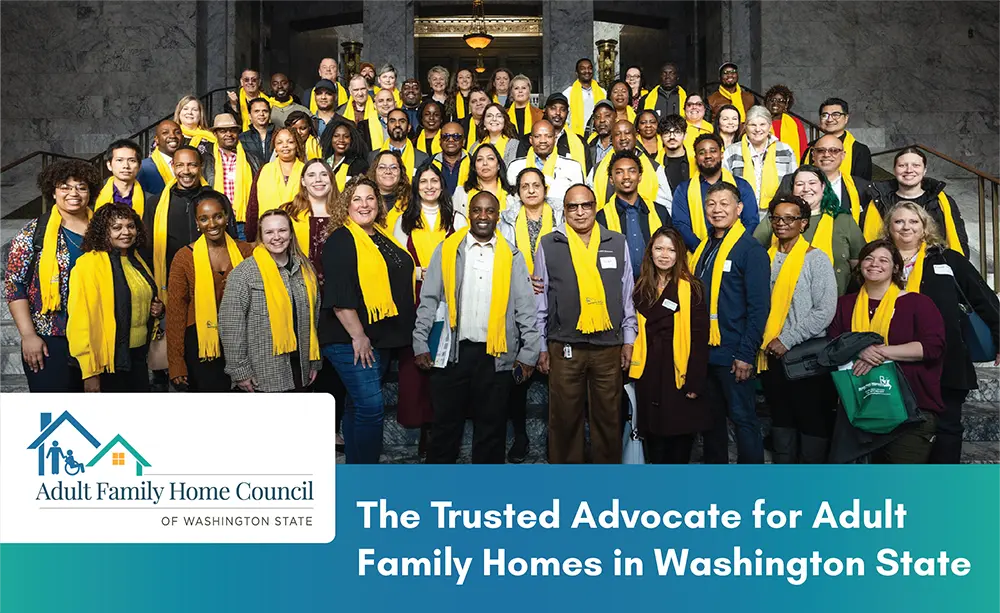
Join the Network of More Than
2,400 Adult Family Homes Today!
Not a Member Yet?
Membership fees enable the Council to cover legal expenses and fund staff to advocate with the state and regulatory agencies. The participation of every adult family home is vital to ensuring fair regulations and rates that accurately reflect the costs of caring for our vulnerable adults. Consider becoming a member of the Council to help us continue improving conditions for all adult family homes in Washington State.