Update on AFH Training Network:
Why the Council Made the Decision to
Designate a New Entity
Dear Providers,
Thank you all once again for joining our statewide chapter meeting. As we mentioned during yesterday’s forum, we stand by the data previously presented regarding the AFHTN and LTCF. The information shared came directly from a quarterly presentation conducted by the Long-Term Care Foundation (LTCF), which included both the Council and DSHS. This same data was also part of the report LTCF submitted to DSHS prior to that meeting. To date, we have not participated in another quarterly meeting, nor have we received an updated report for the upcoming one. The figures presented by the Council are also consistent with those in LTCF’s most recent annual report, which is available on their website.
None of the data or information presented by the Adult Family Home Council was altered or reinterpreted. All figures, notes, and analysis originated from LTCF. If any of the data prove to be inaccurate or incomplete, that responsibility lies solely with LTCF.
To clarify, the reporting period for the data discussed covers January 2020—when AFHTN first began receiving funding directed to LTCF—through June 30, 2025. We have since learned that LTCF updated their figures as of February 26, 2026. Because LTCF remains in operation, it is reasonable that additional individuals may have received HCA or CNA credentials since our last reported timeline. This does not make our numbers incorrect; it simply means the reporting periods differ. If any discrepancies exist in the June 2025 data, that would indicate an error in LTCF’s report to DSHS, as our presentation reflects their data verbatim. Similarly, all financial information we reported was drawn directly from LTCF’s revenue data submitted to DSHS.
Although we have not yet updated our materials to include the new LTCF data, we have reviewed the figures currently being shared publicly. Even with the updated numbers, the underlying question remains: does the level of funding provided yield an appropriate return on investment? Furthermore, we continue to be concerned about the Council’s lack of representation and voice in this matter.
When LTCF amended its bylaws, it was their responsibility to notify and engage the AFH Council regarding those changes. Unfortunately, that did not occur. It is inappropriate to place this responsibility on a shared board member who must maintain confidentiality and respect the duties of both boards they serve. Clear communication should come directly from LTCF’s Board Chair or Executive Director, and shifting that burden elsewhere is not acceptable.
Thank you for your continued engagement and for your commitment to transparency and accountability. Below is information previously provided by the Council that provides additional clarifying points.
How the Training Network Was Created
The AFHTN was created by the Legislature in 2019 through Senate Bill 5672. Before that, AFHs could voluntarily pool resources to train caregivers. But SB 5672 changed everything: it required a portion of provider’s base daily rate be redirected to a centralized training network.
In 2020 that funding was 23 cents per client per bed day which came directly out of the Medicaid rate paid to AFHs.
In addition to the funding that was set up to go to the AFHTN, the law also required the AFH Council, as the exclusive bargaining representative, to designate the entity that would operate the training network. At the time, the Council designated the Long Term Care Foundation (LTCF).
UPDATED: Millions in Funding, But Limited Results
According to LTCF’s own budget documents and annual reports, the organization received more than $8.2 million between July 2023 and June 2025 to operate the AFHTN. While data on the number of caregivers who completed their HCA and CNA during that period has not been provided, available information indicates that from January 1, 2020, through June 30, 2025, the training network certified approximately 700 caregivers through its HCA and CNA programs. For fiscal year 2026, LTCF is projected to receive $5.6 million in funding. Notably, LTCF’s funding structure began at $0.23 per Medicaid resident per bed day and has steadily increased over the past five years.
To put that in context:
- Washington’s longterm care sector faces a projected shortage of more than 14,000 direct care workers by 2030, according to the Washington State Department of Commerce.
- AFHs consistently report caregiver shortages as one of their top operational challenges.
- The state invests millions each year in workforce development to stabilize longterm care.
Against that backdrop, the number of completed certifications raised concerns.
Other Programs Also Fell Short
The Council also highlighted two additional programs that were funded because of AFH advocacy, but delivered minimal results under LTCF:
UPDATED: Language Access Pilot
The Council successfully advocated for dedicated funding to support caregivers with limited English proficiency in completing required training. According to the June 30, 2025 report from LTCF, only 89 individuals were served through this program. In its most recent update, LTCF now reports that 139 individuals have been served. Even if accurate, this figure raises concerns about the program’s overall impact, given the $700,000 allocated by the state legislature for language access. If the full funding has been utilized to assist only 139 participants, it calls into question whether the Council’s efforts to expand LTCF’s programming are yielding the expected return on investment for caregivers and providers.
UPDATED: Health Care Navigation
The Council also secured funding to help AFH owners and employees enroll in health insurance. Over two years, based on the report last dated June 30, 2025, LTCF assisted only 175 people statewide.
Caregiver Recruitment
Recruitment was advertised as a service, but LTCF has provided no data showing how many caregivers were recruited for AFHs.
Loss of Council Oversight Raised Red Flags
When the AFH Council originally designated LTCF to run the training network, two safeguards were put in place:
- Two AFH Council board members were required to sit on the LTCF board.
- The AFH Council Executive Director held a guaranteed “Emeritus” seat.
But in early 2025, after the former Executive Director was let go, LTCF changed its bylaws:
- “Will include two AFHC board members” became “may include up to two.”
- The guaranteed Executive Director seat was eliminated.
- The Council was not notified of these changes.
Without these seats, the Council lost its only formal avenues to advocate for providers or request improvements.
Providers’ Dollars, Providers’ Expectations
The decision to no longer designate the AFHTN contract with LTCF is not personal, it is about performance, accountability, and the responsible use of providerfunded dollars.
While LTCF is expected to receive another $5.6 million next year, it currently holds an additional $5.5 million in savings and investment accounts, money that could be used to expand training access, improve language support, or recruit caregivers.
Why the Council Acted
After reviewing the data, the governance changes, the lack of transparency, and concerns from a large number of providers, the Council concluded that AFH providers deserved better results for the money they are required to contribute.
The Council’s duty is to represent all Medicaidcontracted AFHs, and that includes ensuring that the training network delivers real value.
What Comes Next
The Council is in the process of designating a new entity to operate the Adult Family Home Training Network. Providers will receive:
- Advance notice before any transition
- Clear instructions on what to expect
- Support to ensure training access is not disrupted
-The AFHC
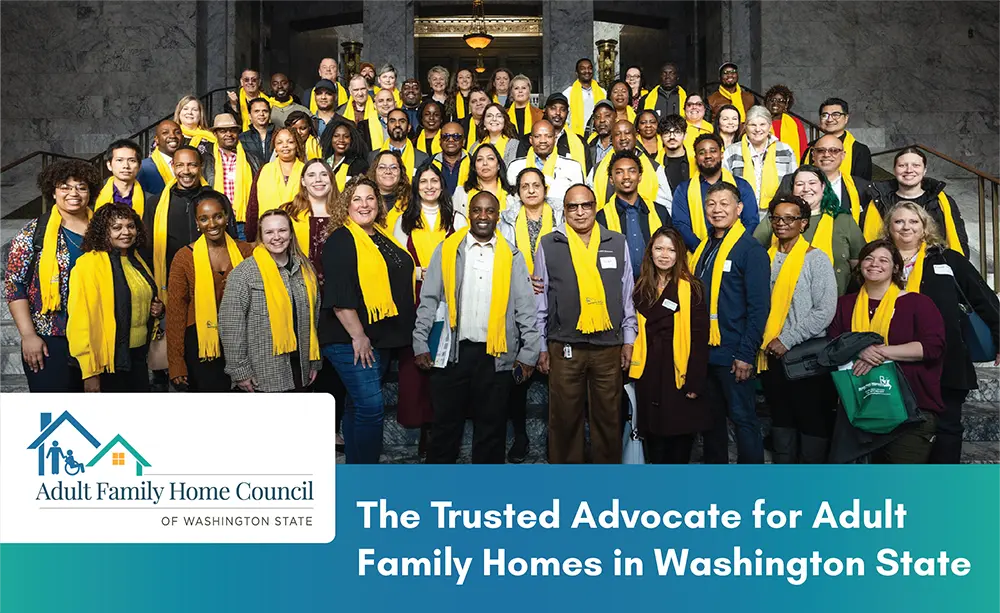
Join the Network of More Than
2,400 Adult Family Homes Today!
Not a Member Yet?
Membership fees enable the Council to cover legal expenses and fund staff to advocate with the state and regulatory agencies. The participation of every adult family home is vital to ensuring fair regulations and rates that accurately reflect the costs of caring for our vulnerable adults. Consider becoming a member of the Council to help us continue improving conditions for all adult family homes in Washington State.